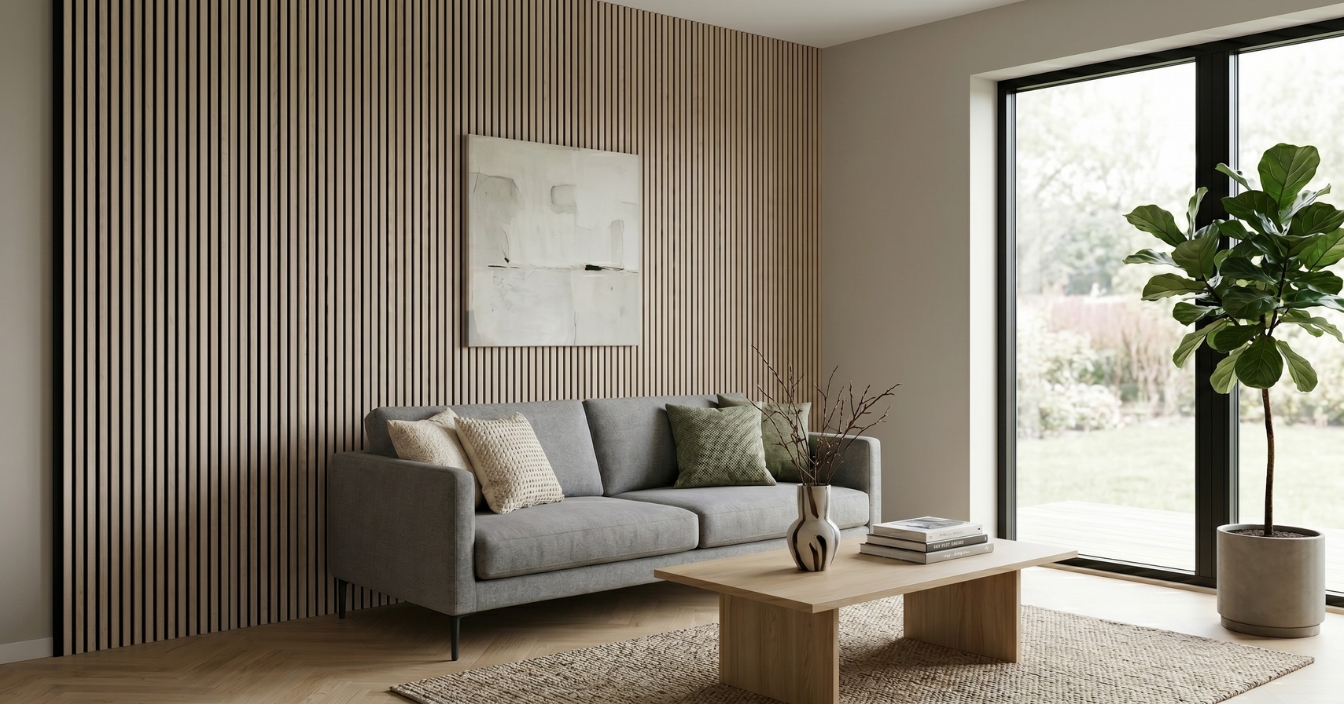
Acoustic issues – echo, impact noise, loud speech – are typical side effects of modern spaces furnished with hard surfaces. Acoustic wall panels provide a targeted, visually appealing solution.
Soundproofing or sound absorption?
The two concepts are often confused, even though they solve very different problems. Soundproofing prevents external noise from penetrating – this requires thick, dense materials (plasterboard-mineral wool sandwich). Sound absorption, on the other hand, reduces echo and reverberation within the room – this is where acoustic wall panels come into play.
Materials
Several materials compete on the market. Polyester felt (PET) panels are lightweight, paintable, and have a soft, textile-like surface — they are particularly popular in offices. Perforated wood panels feature felt or mineral wool backing, allowing them to absorb sound across a wide frequency range – being both decorative and functional. Mineral wool-core panels offer the best performance, especially in professional studios.
Where to install them?
In the case of a home office, the quality of video calls improves drastically when 2–3 panels are placed behind or to the side of the speaker. In conference rooms, they are best placed on the longitudinal wall. In living rooms, behind the TV – this also significantly clarifies the movie and gaming experience. For studios or podcast rooms, multiple walls may require treatment.
Sizing
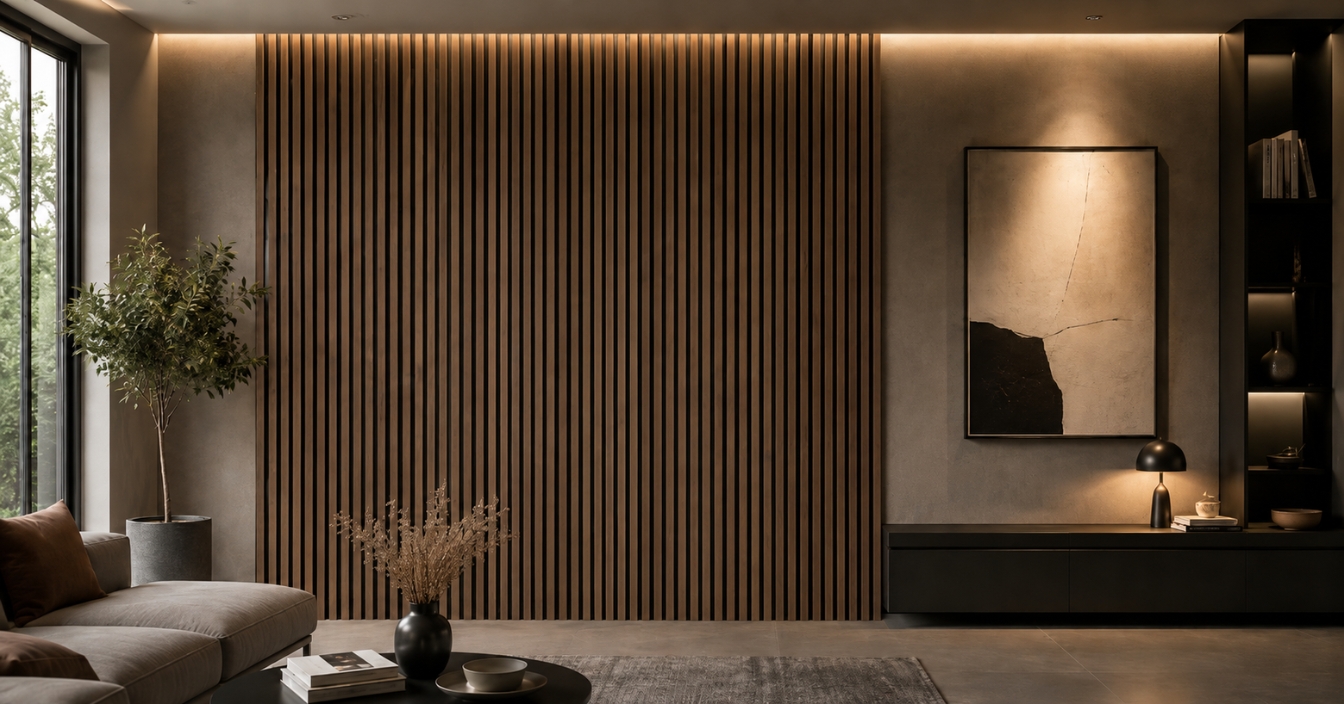
In a home environment, covering just 20–30% of the wall surface results in a significant acoustic improvement. In commercial environments (restaurants, gyms), a higher ratio of 40–50% is required. The panels do not need to form a continuous surface – in fact, they are more effective and visually interesting when arranged in a composition.
NRC value – what does it mean?
The sound absorption efficiency of the panels is indicated by the NRC (Noise Reduction Coefficient) value. 0.0 = no absorption, 1.0 = complete absorption. A high-quality acoustic panel has an NRC value between 0.7 and 0.9. For cheaper decorative panels, this can drop below 0.3 – requesting the technical data sheet from the manufacturer is recommended.
Installation
Most acoustic panels can be glued directly to the wall using special acrylic adhesive. Some versions can be mounted with magnetic or concealed screw systems, ensuring future relocatability. The latter solution is particularly advantageous in rented properties.
A well-thought-out acoustic solution offers more than what the appearance of the panels suggests – conversations become clearer, video calls more professional, and the overall atmosphere of the home becomes calmer.