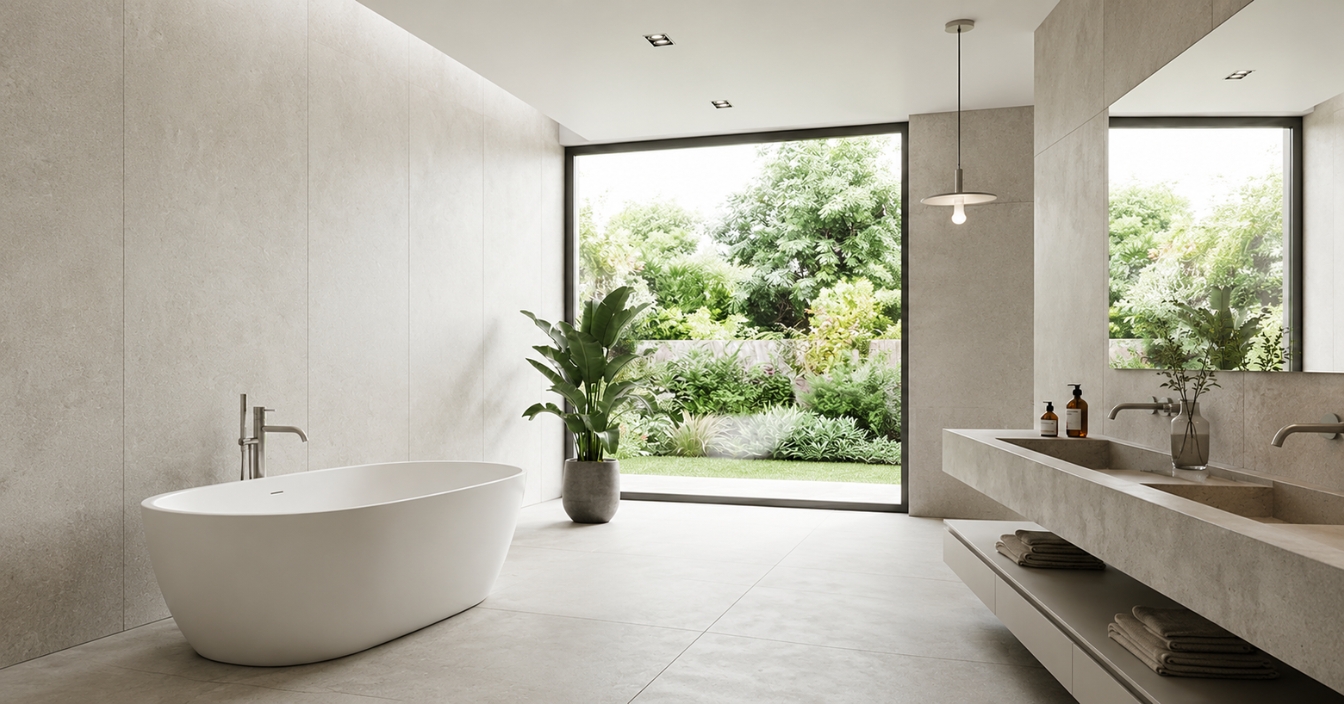
Tiles have been the number one wall cladding for bathrooms for decades. However, waterproof SPC and vinyl wall cladding offers a new alternative - with faster installation, a grout-free surface, and in many cases, lower costs.
What is SPC wall cladding?
Similar to flooring, it is made of a stone dust and PVC-based composite material, but with a thinner (4–5 mm) and lighter design. It features a waterproof core, a marble-, stone-, or wood-effect decorative layer, and a wear-resistant surface. It can be assembled using a click system or glued directly to the wall.
Advantages compared to tiles
The most striking advantage is the lack of grout: the click-system joint is practically invisible, leaving the surface homogeneous. This is not only visually more appealing but also performs better during cleaning - there are no gaps prone to mould.
Further advantages: installation is 2–3 times faster (a bathroom can be completed in as little as one day), there is no dusty demolition (it can also be glued onto existing tiling), and the surface is warmer to the touch than tiles - particularly noticeable in barefoot zones (around the washbasin).
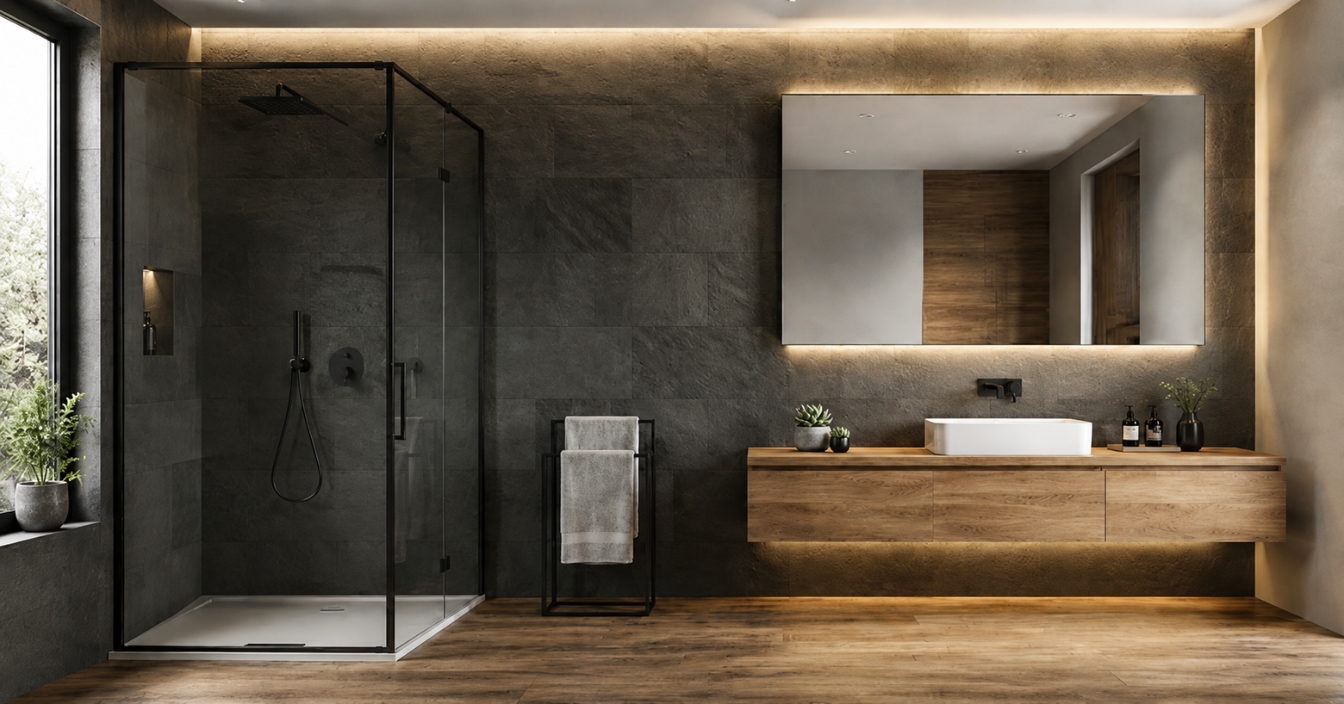
Disadvantages and limitations
Although the surface is water- and heat-resistant, it is not ideal for placement directly above a stove or around a boiler - classic tiles or heat-resistant panels are required there. The connection to the shower tray requires precise silicone sealing, as water cannot penetrate through grout but can enter through the gap between the panel and the tray. Chlorine-based cleaning agents may fade the surface in the long term.
Where is it recommended?
For bathrooms (excluding the shower area), around washbasins, guest toilet walls, kitchen splashbacks (instead of tiles, where not in the immediate vicinity of a stove), and hallways. It is ideal for minor renovations, as it can be fixed onto existing tiles - without demolition.
Joints and finishing profiles
Special aluminium or PVC profiles can be used for corners, ceiling, and floor joints. The Profiwall product range offers a wide selection: corner profiles for internal and external corners, finishing profiles for ceilings, and expansion profiles for long wall runs.
The shower question
It is only recommended for direct shower zones if the manufacturer explicitly states complete waterproofness and it is installed with the appropriate connecting profile system. Otherwise, classic tiling or glass partitions represent the safer choice.
Waterproof wall cladding does not replace tiles in every situation - but in the majority of renovations, it has become a realistic, faster, and cleaner alternative.